Replacing a car part? Before paying full price for a brand-new component, find out whether a quality second-hand part could save you money without compromising your vehicle’s reliability or safety.
A damaged engine, broken headlight or accident-damaged door can leave you facing an expensive repair bill. But does every replacement part need to be brand new?
Not necessarily. Quality used car parts can be a practical and affordable alternative, particularly for older vehicles and repairs involving original factory components. However, some parts are better purchased new, especially when safety, previous wear or manufacturer requirements are involved.
In this guide, we’ll compare second-hand and new auto parts in New Zealand, explain the advantages and risks of each option, and show you what to check before making a purchase.
Used or New Car Parts: What’s the Quick Answer?
The right choice depends on the component, your vehicle’s age, the part’s condition and the cost of the repair.
Choose used car parts when:
- You want to reduce repair costs.
- You need an original factory component for an older vehicle.
- The used part can be properly inspected and its compatibility confirmed.
- A suitable second-hand replacement is available at a reasonable price.
Choose new car parts when:
- The component is safety-critical and a used replacement cannot be reliably verified.
- The vehicle manufacturer requires a new component for the repair.
- The vehicle is under warranty and replacement conditions matter.
- A used alternative has excessive wear, damage or an uncertain history.
Used Car Parts vs New Parts: Side-by-Side Comparison
Before deciding, compare the two options across the factors that matter most: purchase price, condition, availability, warranty and suitability for your vehicle.
| Factor | Used Parts | New Genuine / Aftermarket Parts |
|---|---|---|
| Purchase price | Often more affordable | Usually more expensive |
| Previous use | Previously installed or used in another vehicle | Supplied as new and not previously used |
| Availability | Can be easier to source for older models | May require ordering |
| Warranty | Depends on the supplier and terms | Manufacturer or supplier warranty may apply |
| Condition | Must be checked before purchase | Generally supplied in new condition |
| Environmental impact | Encourages reuse of existing components | Requires new manufacturing |
Are All New Car Parts the Same?
Not all new replacement parts are identical. When comparing new and used car parts, it is important to understand the difference between genuine and aftermarket components.
- Genuine Parts: Parts supplied under the vehicle manufacturer’s own brand, typically through its authorised parts network.
- Aftermarket Parts: New replacement components manufactured by companies other than the original vehicle manufacturer. Their quality and specifications can vary between brands.
- Used Genuine Parts: Original factory components removed from another vehicle. They may offer a suitable replacement at a lower purchase price, depending on their condition and compatibility.
Remanufactured or reconditioned parts are another category. These are previously used components that have undergone a rebuilding or restoration process, so they should not automatically be classified as new parts.
Remember: a lower purchase price does not automatically mean a better deal. Consider installation costs, condition, compatibility and any warranty offered before comparing the final repair cost.
Which Car Parts Are Worth Buying Second-Hand?
Some vehicle components can be excellent candidates for reuse, provided they are compatible with your vehicle and their condition is properly assessed.
1. Body Panels, Doors and Bumpers
Used doors, bonnets, guards, bumpers and other exterior panels can be cost-effective replacements after minor accidents. Original factory panels may also offer a closer fit than some aftermarket alternatives. Check for rust, hidden damage, previous repairs and correct mounting points before purchasing.
2. Headlights, Tail Lights and Mirrors
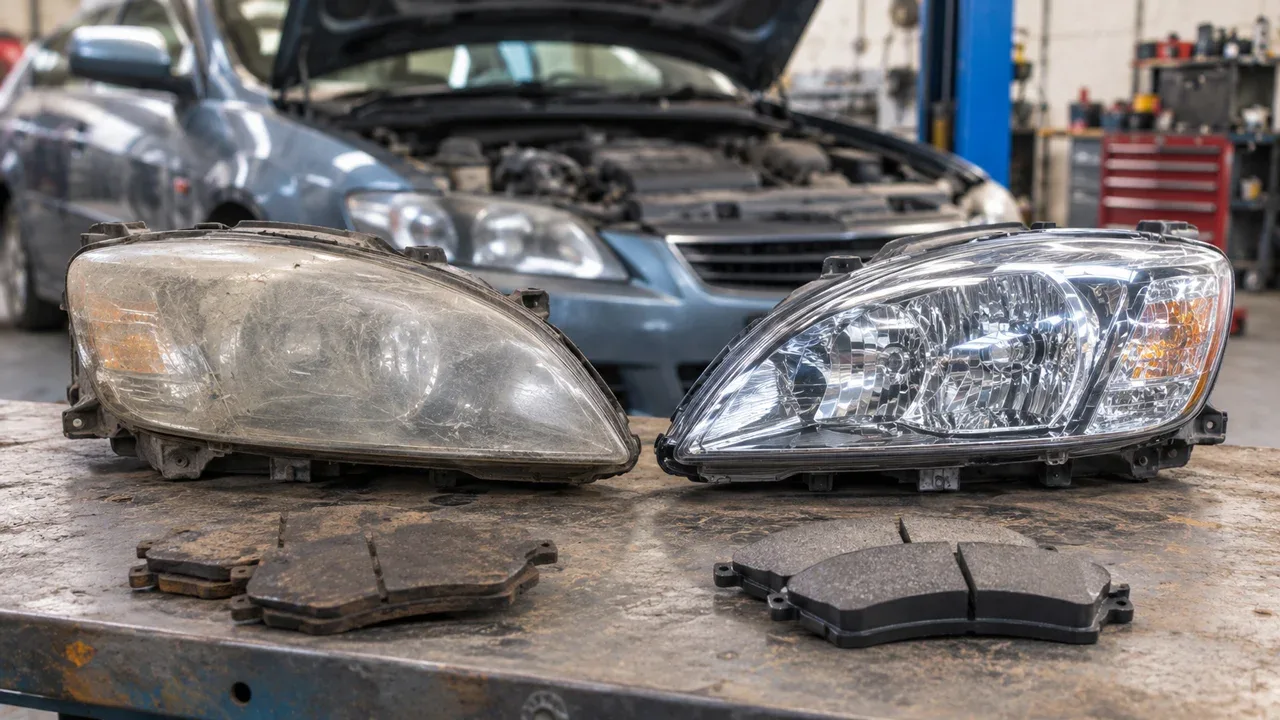
Genuine used lights and mirrors can help reduce repair costs. However, inspect lenses for cracks, moisture, fading and damaged mounting brackets. Confirm that electrical connectors, lighting specifications and adjustment mechanisms match your vehicle.
3. Engines and Gearboxes
A used engine or gearbox may be worth considering when replacing a major component in an older vehicle. Before buying, ask about the donor vehicle, available service or testing information, engine code, mileage where known and any applicable warranty. A qualified mechanic should assess whether the replacement is suitable.
4. Interior Components and Trim
Seats, door trims, dashboards, consoles and interior accessories can often be sourced second-hand. Check their physical condition, electrical connections, colour, trim specification and compatibility with your vehicle’s model and year.
5. Selected Mechanical and Electrical Components
Components such as alternators, starter motors, radiators and other mechanical parts may be available second-hand. Their suitability depends on their operating condition, testing history, compatibility and the repair requirements.
Which Car Parts Should You Be Careful Buying Used?
Saving money should never come at the expense of road safety. Some components require particularly careful assessment, and a new replacement may be the safer or more appropriate choice.
Braking and Steering Components
Brakes and steering directly affect your ability to control the vehicle. Used components may have hidden wear or damage. Have a qualified mechanic assess the repair requirements and follow the vehicle manufacturer’s specifications. New parts are often the more appropriate option for worn friction components such as brake pads.
Airbags and Seatbelts
Airbags and seatbelts are essential safety systems. Avoid unverified second-hand components, particularly parts from accident-damaged vehicles. Follow manufacturer requirements and obtain professional advice before replacing or reusing any restraint-system component.
Suspension and Structural Components
Suspension components and structural parts can suffer from fatigue, corrosion or impact damage. Their condition may not be obvious from appearance alone. Ask a qualified mechanic to determine whether a used component is suitable for the intended repair.
The safest choice depends on the component, its condition and the manufacturer’s requirements. When in doubt, get professional advice before purchasing or installing a replacement part.
Are Used Car Parts Actually Cheaper?
In many cases, yes. Used auto parts can cost less than equivalent new components, but the actual saving depends on the vehicle, part availability, condition and supplier.
For example, if an older vehicle needs a replacement door, a compatible genuine second-hand door may be more economical than purchasing a new panel and paying additional costs for painting and fitting.
Compare the Total Repair Cost
- Purchase price of the replacement component
- Delivery or shipping costs
- Installation and labour charges
- Any additional repairs required
- Warranty coverage and return conditions
- Expected remaining service life of the component
A cheaper component is not necessarily the most economical choice if it requires additional work or needs replacing again soon.
How to Choose Quality Second-Hand Car Parts
Before ordering a used component, take a few minutes to verify the following details. This can help prevent compatibility problems, unnecessary expenses and delays.
1. Confirm Vehicle Compatibility
Check the vehicle’s make, model, manufacturing year, engine size and variant. Two vehicles from the same model range may use different components.
2. Check the Part Number
Whenever possible, compare the original manufacturer’s part number with the replacement. This is particularly important for engines, gearboxes, electronic modules and other model-specific components.
3. Ask About the Condition
Ask whether the component has been tested, inspected or checked for visible damage. For mechanical parts, request any available information about their previous use and condition.
4. Understand the Warranty and Return Policy
Ask whether a warranty applies, how long it lasts, what it covers and whether there are conditions for returning an unsuitable or faulty component. Do not assume every second-hand part comes with the same protection.
In New Zealand, second-hand products purchased from a business for personal, domestic or household use are generally covered by the Consumer Guarantees Act (CGA). Your rights depend on the circumstances of the purchase and the condition of the goods. Private sales between individuals are generally not covered by the CGA. A supplier’s commercial warranty is separate from your statutory consumer rights.
5. Compare the Final Price
Compare the complete cost of the used and new options, including delivery, installation and any additional work required.
Where to Find Used Car Parts in New Zealand
Finding the right replacement part is just as important as choosing between new and used. You need a supplier who can help identify a compatible component and explain its availability, condition and applicable terms.
Auto Vera’s used car parts service helps customers across New Zealand find replacement components for a range of vehicle makes and models.
Depending on availability, options include engines, gearboxes, body panels, headlights, mirrors, interior components and other replacement parts. New and used options may be available, so you can discuss which solution best suits your vehicle and repair requirements.
What Information Should You Provide?
To help identify a suitable replacement, provide:
- Vehicle make and model
- Year of manufacture
- Engine size or engine code, if known
- VIN or registration number, if available
- Name or part number of the component
- A photograph of the original component, if possible
These details can help reduce the risk of ordering an incompatible part.
What If Your Car Is Too Expensive to Repair?
Sometimes, replacing a damaged component is not the most economical decision. If repair costs are higher than the vehicle’s value, selling the car may be worth considering.
Auto Vera also buys unwanted, damaged and end-of-life vehicles. Depending on the vehicle and collection arrangements, you can request a quote through its Cash for Cars New Zealand service or learn more about Free Car Removal.
If you are unsure whether repairing or selling your vehicle makes more financial sense, compare the estimated repair cost with the offer you receive before making a decision.
You can also read our guide: How Much Is My Scrap Car Worth in New Zealand?
Frequently Asked Questions About Used and New Car Parts
Are used car parts reliable?
They can be reliable when they are suitable for the vehicle, properly assessed and supplied with clear information about their condition. Reliability also depends on the type of component and its previous use.
Are second-hand car parts cheaper than new parts?
Often, yes. Used parts generally have a lower purchase price, although delivery, installation and potential additional repairs should also be considered.
Can I buy genuine original car parts second-hand?
Yes. Many dismantled vehicles contain genuine factory components that can be reused. Always confirm the part number, compatibility and condition before purchasing.
How do I know if a used car part will fit my vehicle?
Provide the vehicle’s make, model, year, engine details and VIN or registration number where available. Comparing the manufacturer’s part number is also helpful.
Do used car parts come with a warranty?
Warranty coverage varies between suppliers and components. Ask for the applicable terms in writing before purchasing, including what is covered and any return conditions.
Should I buy a used engine or gearbox?
A used engine or gearbox may be a cost-effective option, especially for an older vehicle. However, check compatibility, available testing information, condition and warranty terms, and have a qualified mechanic assess the installation.
Does Auto Vera supply used car parts in New Zealand?
Yes. Auto Vera offers new and used replacement auto parts for various vehicle makes and models, subject to availability. Contact the team with your vehicle details to check suitable options.
Can I sell my damaged car instead of repairing it?
Yes. Auto Vera buys unwanted, damaged and end-of-life vehicles. Request a quote to find out what options may be available for your vehicle.
Looking for the Right Replacement Car Part?
Don’t pay more than you need to. Contact Auto Vera with your vehicle details and the part you need. Our team can help you check available new and used options and discuss the next steps.
📞 Call 022 531 2692
Check Part Availability
Call, SMS or WhatsApp Auto Vera to discuss your vehicle or replacement part.