
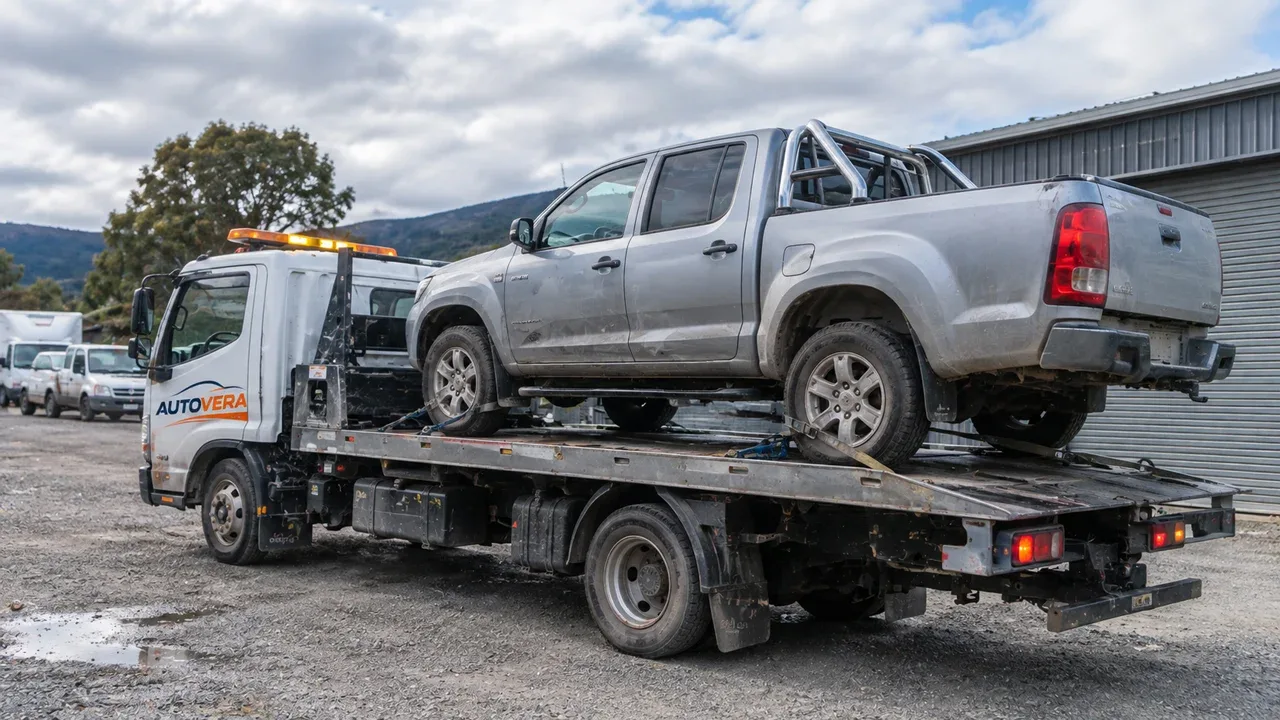
Need to remove an unwanted truck, work ute or commercial vehicle? Auto Vera helps vehicle owners arrange practical collection options for unwanted, damaged and non-running commercial vehicles across selected New Zealand service areas.
An unwanted truck or commercial ute can become a difficult problem when it no longer runs, takes up valuable business space or is too expensive to keep. Unlike ordinary passenger cars, larger commercial vehicles may require specialised recovery equipment, suitable access and careful collection planning.
Whether you have an old work ute sitting in your driveway, a damaged delivery truck at your business premises or a commercial vehicle that has reached the end of its working life, understanding the removal process can help you make the right decision.
Auto Vera helps customers explore vehicle collection and removal options across selected areas of New Zealand. This guide explains what can affect truck and ute removal, how collection works and what to prepare before your vehicle is collected.
Why Is Truck and Ute Removal Different from Car Removal?
Removing a truck or commercial ute is not always as straightforward as collecting a standard passenger vehicle. The size, weight, condition and location of the vehicle can all affect the equipment and arrangements needed for safe collection.
A small work ute may be relatively straightforward to transport, while a larger commercial truck may require a suitable recovery vehicle, additional loading space or specialist transport arrangements.
Several factors make commercial vehicle removal different:
- Vehicle Size and Weight: Larger trucks may require recovery equipment with sufficient capacity.
- Mechanical Condition: A vehicle that cannot start, steer or move may need a different collection method.
- Access Restrictions: Narrow driveways, low entrances and restricted loading areas can make collection more complicated.
- Vehicle Location: Collecting a vehicle from a business yard, construction site or rural property may require additional planning.
- Transport Requirements: Some commercial vehicles may need specialised towing or recovery arrangements rather than ordinary car towing.
Understanding these details before booking a collection helps avoid unnecessary delays and ensures the right arrangements can be discussed.
What Types of Trucks and Utes Can Be Removed?
Commercial vehicles come in many shapes and sizes. Some are used every day for deliveries and trade work, while others may have been parked for months because of mechanical problems or business changes.
Auto Vera can assess enquiries for unwanted commercial vehicles, including work utes and selected trucks. Collection availability depends on vehicle size, condition, location and transport requirements.
- Work Utes: Single-cab, extra-cab and dual-cab vehicles previously used for business or trade work.
- Light Commercial Trucks: Small delivery trucks and light-duty transport vehicles.
- Medium Commercial Trucks: Vehicles used for business deliveries, transport and other commercial operations.
- Heavy Trucks: Larger commercial vehicles that may require specialised recovery and transport arrangements.
- Delivery Vehicles: Older trucks and commercial vehicles no longer needed for business operations.
- Commercial Vans: Unwanted work vans and business transport vehicles.
- Damaged Commercial Vehicles: Trucks and utes affected by accident damage or mechanical faults.
- End-of-Life Vehicles: Commercial vehicles that are no longer economical to maintain or repair.
Not all commercial vehicles can be collected in every location. Larger trucks, severely damaged vehicles and vehicles requiring specialist recovery will need to be assessed individually before collection can be confirmed.
Can a Non-Running Truck or Ute Be Removed?
Yes, a commercial vehicle does not necessarily need to be running to be considered for removal. However, its mechanical condition is important because it determines how the vehicle can be loaded and transported.
For example, an unwanted truck may have:
- A failed engine that prevents it from starting.
- Transmission problems that make it unable to move.
- Steering or suspension damage.
- Accident damage affecting its ability to be driven.
- Electrical faults or a completely flat battery.
- Mechanical problems that make it unsafe to operate.
Even if the vehicle cannot be driven, suitable recovery equipment may make collection possible. The exact method depends on the vehicle’s condition, size, accessibility and available transport equipment.
When contacting Auto Vera, explain whether the vehicle starts, whether its wheels can move and whether the steering and brakes are functional. These details help determine what collection arrangements may be suitable.
Important Information for Non-Running Vehicles
Do not attempt to move a severely damaged or unsafe truck yourself just to prepare it for collection. Let the collection team know about any mechanical, structural or access problems before transport is arranged.
How Is a Truck Removed from a Property or Business Premises?
Where a truck is located can be just as important as its condition. A vehicle parked in an open yard may be easier to access than one positioned inside a narrow workshop or behind other commercial vehicles.
Before arranging truck removal, consider the following access requirements:
- Driveway Access: Check whether the entrance is wide enough for the required recovery vehicle.
- Overhead Clearance: Look for low branches, cables, roof structures and other obstacles.
- Ground Conditions: Soft ground, steep slopes and uneven surfaces can affect recovery access.
- Parking Position: Let the collection team know if the truck is blocked by other vehicles or equipment.
- Loading Space: Larger recovery vehicles may need enough room to position themselves safely.
- Site Permission: If the truck is located at a workplace, construction site or shared property, arrange access permission in advance.
If the vehicle is difficult to access, photographs of the entrance, parking area and truck can help explain the situation before a collection is scheduled.
What Information Is Needed to Arrange Truck or Ute Removal?
Providing accurate information at the beginning can make the removal process much easier. It helps the team understand the vehicle, assess its condition and discuss the collection arrangements before making a booking.
Before contacting Auto Vera, try to prepare the following information:
- Vehicle Details: Provide the make, model, year and vehicle type.
- Current Condition: Explain whether it runs, starts, moves or has mechanical or accident damage.
- Vehicle Location: Give the suburb, town or full collection address when arranging the booking.
- Access Information: Mention narrow entrances, restricted access or other collection difficulties.
- Vehicle Photographs: Provide clear photos of the vehicle, its condition and its surroundings if possible.
- Available Documents: Let the team know what registration and vehicle documents are available.
- Collection Requirements: Explain whether the vehicle is parked at a private residence, commercial property or another location.
The more accurate the information, the easier it is to discuss suitable collection options and identify potential transport issues before the vehicle is moved.
How Does the Truck and Ute Removal Process Work?
Arranging commercial vehicle removal does not need to be complicated. The first step is to explain what needs to be collected and where it is located. From there, the collection requirements and available options can be discussed.
- Contact Auto Vera: Call, send a message or submit the online quote form with your vehicle details.
- Explain the Vehicle Condition: Tell us whether the truck or ute is running, damaged or completely non-operational.
- Discuss Collection Requirements: Provide the location, access information and any special recovery requirements.
- Confirm the Available Options: Discuss the collection method, timing and any applicable costs before proceeding.
- Arrange Vehicle Collection: If the arrangements are suitable, confirm the collection time and prepare the vehicle for handover.
- Complete the Necessary Handover: Confirm the agreed paperwork, payment arrangements if applicable and relevant vehicle disposal requirements.
Collection timing depends on the vehicle, its location, access conditions, transport requirements and availability.
How Much Does Truck and Ute Removal Cost?
One of the most common concerns when removing a large commercial vehicle is the cost of transport. Hiring a separate towing or recovery company can be expensive, particularly when dealing with larger trucks or vehicles that cannot move under their own power.
Auto Vera offers vehicle buying and removal services, and free collection may be available for eligible vehicles depending on the vehicle, its location and the practical requirements of collection.
However, free removal should never be assumed for every truck or commercial vehicle. Vehicle size, weight, condition, distance and the equipment required may all influence the available arrangements.
Before confirming a collection, ask whether removal is included in the arrangement or whether additional transport costs apply.
You can also explore our Free Car Removal service to learn more about collection options for eligible vehicles. Commercial truck removal must be assessed separately.
What Happens to a Truck After Removal?
The next step after collection depends on the vehicle’s condition, its remaining useful life and the reason it was removed.
Some commercial vehicles may still have usable components, while others may be more suitable for dismantling or end-of-life processing.
Depending on the vehicle and its condition, possible outcomes may include:
- Reuse: A vehicle in suitable condition may have components or other value that can be reused.
- Parts Recovery: Usable engines, transmissions, body components and other parts may be recovered where appropriate.
- Dismantling: Vehicles that are no longer suitable for road use may be dismantled for reusable components.
- Material Recycling: Recoverable materials may be separated and sent for appropriate recycling.
Where suitable facilities and processing arrangements are available, reusable components and recoverable materials may be separated to help reduce unnecessary waste. The appropriate disposal method depends on the vehicle and applicable environmental requirements.
Auto Vera also provides Cash for Trucks services for owners who want to explore selling an unwanted commercial vehicle rather than simply arranging its removal.
Do You Need WoF, CoF or Registration for Truck Removal?
An unwanted truck or ute may have an expired Warrant of Fitness (WoF), Certificate of Fitness (CoF) or vehicle licence (rego). An expired document does not automatically prevent you from enquiring about vehicle removal. However, the vehicle’s condition and legal status must be considered when arranging its collection and transport.
It is important to understand the difference between transporting a vehicle and driving it on public roads. If a truck or ute does not meet the applicable road-use requirements, it should not simply be driven to a collection point. An appropriate transport or recovery method may be required instead.
In New Zealand, heavy vehicles such as trucks generally require a Certificate of Fitness (CoF), while light vehicles are generally subject to Warrant of Fitness (WoF) requirements. You can read the official NZTA Certificate of Fitness requirements to understand which certification applies to your vehicle.
Vehicle registration and vehicle licensing (rego) are related but separate matters. If a truck or ute has reached the end of its useful life and is being permanently taken off the road, you may need to consider cancelling its registration. Check the official NZTA vehicle registration cancellation requirements before proceeding.
If you are transferring ownership or disposing of a vehicle, you should also follow the relevant NZTA vehicle selling and disposal guidance to understand your responsibilities.
Before arranging truck or ute removal with Auto Vera, provide details about the vehicle’s current WoF or CoF status, registration, condition and location. This helps determine the appropriate collection and transport arrangements for your vehicle.
Truck and Ute Removal Across Selected New Zealand Locations
Auto Vera provides vehicle services across selected locations in Manawatū-Whanganui, Taranaki and Greater Wellington. Truck and commercial vehicle collection availability must be confirmed separately for each location.
Our service areas include:
- Palmerston North
- Feilding
- Wanganui
- Hāwera
- Stratford
- New Plymouth
- Levin
- Ōtaki
- Paraparaumu
- Waikanae
- Upper Hutt
- Lower Hutt
- Porirua
- Wellington
Truck and heavy commercial vehicle collection may have different requirements from ordinary car removal. Service availability, collection costs and timing must be confirmed for each vehicle and location.
If your location is not listed, you can still contact us with your suburb and vehicle details to ask whether collection may be possible.
Truck Removal or Selling Your Truck – Which Option Is Right?
Vehicle removal and selling a commercial vehicle are related, but they are not exactly the same thing.
If your main concern is getting an unwanted vehicle collected from your property, understanding transport requirements and collection options should be your priority.
If you want to sell your truck and receive a cash offer, you should also consider its make, model, condition, age and potential market value.
Auto Vera can help you explore both options:
- Cash for Trucks NZ: Learn more about selling unwanted trucks, utes and commercial vehicles and requesting a cash offer.
- Free Car Removal NZ: Explore collection and removal options for eligible unwanted vehicles.
- Cash for Cars NZ: Find out about selling unwanted, damaged and non-running passenger vehicles.
The right option depends on the type of vehicle, its condition and what you want to achieve.
Frequently Asked Questions About Truck and Ute Removal NZ
Can you remove a truck that does not start?
Non-running trucks can be considered for removal. Tell us whether the vehicle starts, moves, steers and has any major mechanical problems so suitable collection options can be discussed.
Can you remove an accident-damaged commercial vehicle?
Damaged commercial vehicles can be assessed. The extent of the damage, vehicle condition, location and transport requirements will influence the available collection arrangements.
Is free truck removal available?
Free collection may be available for eligible vehicles. It depends on factors such as vehicle size, weight, condition, location and transport requirements. Confirm any applicable costs before booking.
Can you remove a truck from a business or construction site?
Collection from commercial premises may be possible, depending on access, vehicle condition and transport requirements. Make sure you have permission to arrange removal from the property and explain any site restrictions in advance.
Can you remove a truck without a current CoF or registration?
A vehicle without a current CoF or registration may still be considered for removal. However, it must be transported using an appropriate arrangement rather than driven illegally on public roads. Discuss its status before collection.
Do you remove work utes and commercial vans?
You can enquire about removing unwanted work utes, dual-cab vehicles, commercial vans and other business vehicles. Provide the vehicle details and location so availability can be confirmed.
What information should I provide before arranging removal?
Provide the vehicle’s make, model, year, condition and location. Photos, details about mechanical faults and information about property access can also help.
How long does truck removal take?
Collection timing depends on the vehicle, location, access conditions, required equipment and availability. Contact Auto Vera to discuss suitable collection times.
Do I need to prepare my truck before collection?
Remove personal belongings and business equipment where possible, make sure the collection team can access the vehicle and disclose any known mechanical or safety issues. Do not attempt to move an unsafe vehicle yourself.
Can I ask for a quote before arranging removal?
Yes. Contact Auto Vera with your vehicle details and location to discuss a quote and available collection arrangements before deciding whether to proceed.
Need Your Truck or Ute Removed?
Whether your commercial vehicle is damaged, no longer running or simply taking up valuable space, Auto Vera can help you explore the available removal options. Contact us with your vehicle details and location to get started.
📞 Call 022 531 2692
Request a Free Quote
Auto Vera | Truck, Ute & Commercial Vehicle Removal New Zealand